For many, fear of the unknown can be paralyzing. A smell, a taste, an object that cannot be identified… for most people, it is a warning to stay away.
For mass spectrometrists, it is an invitation.
To celebrate the season, LECO is taking a look at the spookier side of mass spectrometry with a virtual symposium celebrating Science from Beyond the Grave.
 Our first speaker, Jane Hill, will start the presentations with her talk: Disease: Trick or Treat? Metabolomics is changing how we monitor our health. Jane finished a BS in Chemical Engineering and technical MBA at Rensselaer, ran a small bioremediation company in central New York State for a few years, and completed her PhD at Yale University Water Treatment with Technologist Menachem Elimelech. She then worked with Biotechnologist Jordan Peccia at Yale for her post-doctoral experience. After over a decade of studying organic phosphorus compounds in the environment, Jane turned her focus to infectious diseases and metabolomics.
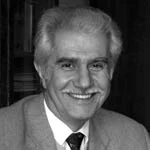 Around 11 am EDT, Albert Lebedev will begin his talk: What Mass Spectrometry Can Tell You About 5,000-Year-Old Mummies. Albert received his PhD in 1982 and DSc in 1992 in Organic Chemistry from the Moscow State M.V. Lomonosov University. He is currently a Professor of the Chemistry Department of the Moscow State M.V. Lomonosov University and head of the Laboratory of Organic Analysis, with more than 250 scientific papers and reviews published to his name, as well as several books on mass spectrometry, including Methods and Achievements of Modern Analytical Chemistry (Lan, 2020), two editions of Mass Spectrometry in Organic Chemistry (Binom, 2003; Technosfera, 2015), Basics of Mass Spectrometry of Peptides and Proteins (Technosfera, 2012), and Comprehensive Environmental Mass Spectrometry (ILMPublications, UK, 2012).
 Just before noon, EDT, Shari Forbes will present the final talk: Death, Decomposition, and Dogs. Shari completed a BS (Honors) in Applied Chemistry and Forensic Science and a PhD (specialization in Forensic Chemistry) at the University of Technology Sydney. She completed her Postdoctoral Fellowship at the Centre for Forensic Science, University of Western Australia. She was the founding Director of the Forensic Science program at the University of Ontario Institute of Technology, then was an Australian Research Council Future Fellow in the Centre for Forensic Science at the University of Technology Sydney. She established and directed the first human taphonomy facility in Australia, known as the Australian Facility for Taphonomic Experimental Research (AFTER). She is currently the director of the first human taphonomy facility in Canada for Recherche en Sciences Thanatologiques [Expérimentales et Sociales] (REST[ES]).
The three presentations will be followed by a Q&A session with all of the speakers and a roundtable discussion that can go beyond the grave topics of the symposium.